When you're picking out the right Smd Led Light for your needs, it’s pretty important to make an informed choice — it can really boost how well everything works and how efficient it is. Richard Lawson, who knows his stuff over at Bright Future Lighting, puts it like this: "Choosing the right SMD LED isn’t just about specs; it’s about maximizing energy savings while still getting that look and performance you want." He’s basically saying you should think about more than just technical details — how well the lights will actually fit into your overall lighting setup matters a lot too.
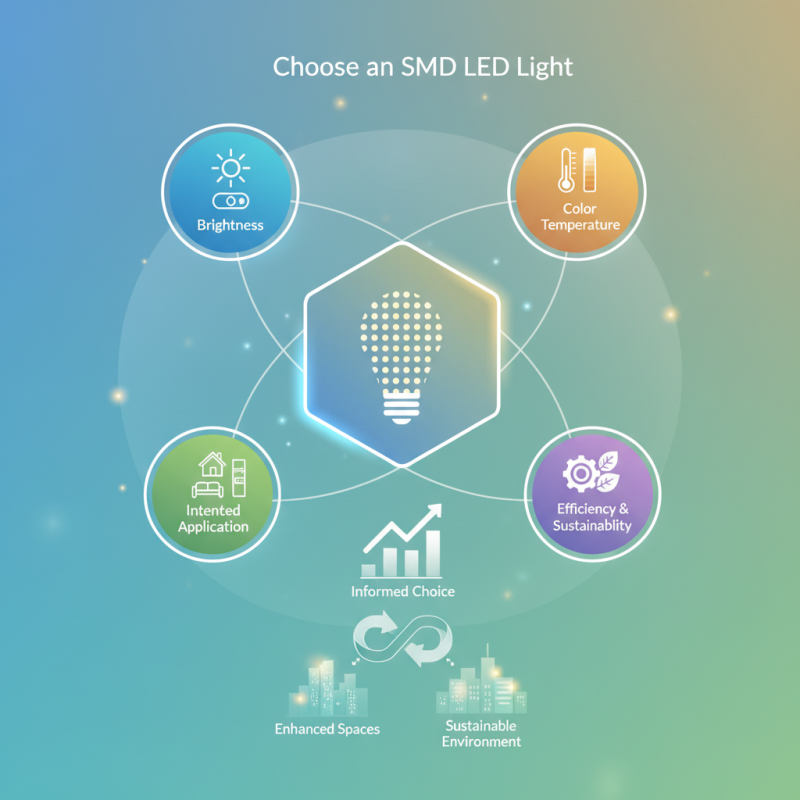
SMD LED lights have become super popular because they're so versatile and they save energy. But honestly, with so many options out there, it can feel a bit overwhelming to figure out which one is right for you. Things like how bright it is, the color temperature, and what you’re planning to use the lights for all play a role. Getting these things right is key so that your lighting not only looks good but also works well for what you need. In the end, understanding these basics helps you make smarter choices — choices that make your space look better and help the environment too.
Understanding SMD LED Light Types and Specifications
When choosing the right SMD (Surface Mount Device) LED lights for your specific needs, understanding the types and specifications is crucial. SMD LEDs are available in various formats, including 3528, 5050, and 2835, each distinguished by size, brightness, and energy efficiency. According to a report by Markets and Markets, the SMD LED market is projected to reach USD 25.8 billion by 2025, underscoring the importance of selecting the appropriate type for optimal performance. The 5050 SMD, for instance, is renowned for its high brightness, making it ideal for applications requiring strong illumination, while 3528 SMDs are more suitable for decorative lighting due to their lower power consumption.
Another key aspect to consider is the luminous efficacy, which measures how much visible light is produced per watt of electrical power consumed. The U.S. Department of Energy notes that LED efficacy has improved significantly over the years, with average efficacy values now exceeding 100 lumens per watt. This is a vital specification to evaluate, especially in commercial applications where energy costs are a major concern. Furthermore, selecting LEDs with a suitable color temperature—typically ranging from 2700K to 6500K—can enhance your lighting scheme by providing the desired ambiance and functionality for your space. Ultimately, understanding these specifications will guide you in making an informed decision tailored to your lighting requirements.
Comparison of SMD LED Light Types in 2025
This chart illustrates the lumen output comparison of various SMD LED light types in 2025. The 5630 SMD LED offers the highest lumen output, making it a suitable choice for applications requiring bright illumination.
Key Factors to Consider When Selecting SMD LED Lights
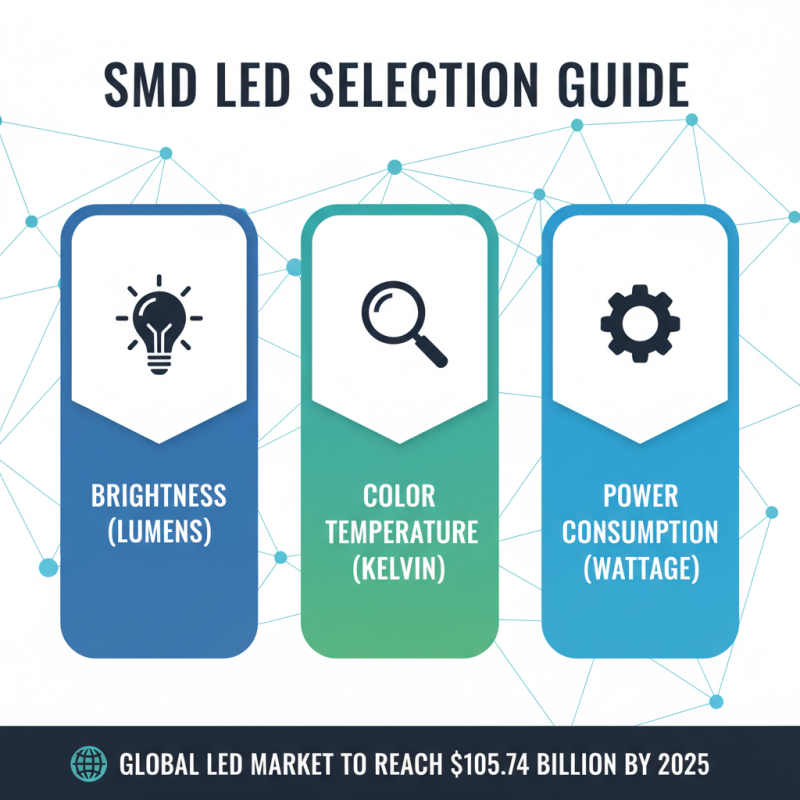
When selecting SMD LED lights, there are several key factors to consider to ensure that you make the right choice for your specific needs. First and foremost, it’s crucial to evaluate the brightness level of the LED lights, measured in lumens. According to market research from MarketsandMarkets, the global LED lighting market is projected to reach $105.74 billion by 2025, indicating a trend toward higher efficiency and brightness. Choosing lights that offer an appropriate lumen output for your space—whether for residential or commercial use—can significantly impact visibility and ambiance.
Another important factor is the color temperature of the LED lights, often expressed in Kelvins (K). The Illuminating Engineering Society categorizes color temperatures into three main categories: warm white (2700K-3000K), neutral white (3500K-4100K), and cool white (5000K-6500K). According to a report by ResearchAndMarkets, the demand for customizable color temperature settings is growing, reflecting preferences for various applications, from relaxed home environments to vibrant commercial displays. Ensuring that the chosen SMD LED lights align with the intended ambiance and utilization of the space is essential for maximizing comfort and productivity.
Lastly, energy efficiency plays a critical role in the selection process. The Department of Energy reports that LED lights consume up to 75% less energy than traditional incandescent bulbs, presenting significant cost savings over time. When choosing SMD LED lights, looking for high-efficiency ratings can lead to reduced energy bills and a lower environmental impact. Given the combination of brightness, color temperature, and efficiency, a well-informed selection can enhance both the functionality and aesthetic of any setting.
Analyzing Lumens and Watts: How They Affect Brightness
When selecting the right SMD LED light, understanding the relationship between lumens and watts is crucial for achieving desired brightness levels while maintaining energy efficiency. Lumens measure the total amount of visible light emitted by a source, while watts indicate the amount of energy consumed. According to industry reports, such as those published by the U.S. Department of Energy, modern LED lights produce approximately 80-100 lumens per watt. This is a significant improvement compared to traditional incandescent bulbs, which only deliver about 10-17 lumens per watt. Therefore, when assessing LED options, higher lumens with lower wattage can ensure that you obtain more brightness while minimizing energy use.
In practical terms, a light fixture rated at 800 lumens, for example, would require only about 8 to 10 watts if it is an SMD LED, compared to around 60 watts for a standard incandescent bulb achieving the same brightness. This efficiency not only impacts energy bills but also the overall environmental footprint of lighting systems. Additionally, studies indicate that an optimal balance between lumens and watts can also prolong the lifespan of lighting solutions, as lower power consumption typically translates to reduced heat production, which is a common cause of early failure in illuminating devices. Understanding this dynamic allows consumers and businesses alike to make informed choices that fulfill specific lighting needs while contributing to energy conservation efforts.
Color Temperature and CRI: Choosing the Right Light Quality
When selecting the right SMD (Surface-Mounted Device) LED light for your needs, understanding color temperature and Color Rendering Index (CRI) is crucial. Color temperature, measured in Kelvin (K), defines the warmth or coolness of the light emitted. For example, a temperature of around 2700K provides a warm, inviting ambiance suitable for residential settings, while a cooler light around 5000K is often preferred in commercial spaces for its clarity and focus. A study conducted by the Institute of Lighting Professionals indicates that the appropriate color temperature can enhance mood and productivity, making it essential to align light quality with the intended use of the space.
In addition to color temperature, CRI plays a significant role in how accurately colors appear under artificial light. CRI is measured on a scale from 0 to 100, with higher values indicating better color rendering. According to the U.S. Department of Energy, using LED lights with a CRI of 90 or above is ideal for settings where color precision is critical, such as art studios or retail environments. Lighting with a lower CRI can distort colors, leading to poor visual perception and decision-making. Therefore, considering both color temperature and CRI is vital in choosing the right SMD LED light to ensure it meets the specific needs of your environment and enhances visibility effectively.
Evaluating Lifespan and Energy Efficiency of SMD LEDs
When selecting SMD LED lights, understanding their lifespan and energy efficiency is crucial for making an informed decision. SMD LEDs typically boast a longevity of 25,000 to 50,000 hours, significantly outlasting traditional incandescent bulbs, which generally last around 1,000 hours. This increased lifespan not only reduces the frequency of replacements but also lowers maintenance costs over time. According to a 2022 report by the U.S. Department of Energy, LED lighting can last up to 25 times longer than incandescent lighting, making them a highly viable option for both residential and commercial applications.
Energy efficiency is another essential factor to consider when choosing SMD LEDs. These lights convert approximately 80-90% of their energy into light, in contrast to incandescent bulbs, which convert only about 20% of their energy into usable light. The Lawrence Berkeley National Laboratory noted that switching from traditional lighting to LED technology could lead to savings of 50-75% on energy bills. This substantial reduction in energy consumption not only results in cost savings for consumers but also contributes to a decrease in overall greenhouse gas emissions, aligning with global sustainability goals. With these advantages, SMD LEDs emerge as an environmentally friendly choice that meets modern illumination needs effectively.
Installation Considerations for SMD LED Lighting Solutions
When considering the installation of SMD LED lighting, it is essential to evaluate the specific environment where the lights will be used. Factors such as the size of the space, the surrounding decor, and the height of the ceiling play crucial roles in determining the suitable type and intensity of the lighting needed. For instance, a higher ceiling may necessitate brighter SMD LED lights to ensure adequate illumination, while a smaller area might require less powerful options. Additionally, compatibility with existing fixtures or the need for modifications should be assessed prior to installation.
Another key consideration is the placement of the SMD LED lights. Strategic positioning can greatly enhance both functionality and aesthetics. For task-oriented areas, such as kitchens or offices, directing light where it is needed most can improve productivity and safety. On the other hand, ambient lighting in living spaces should create a warm and inviting atmosphere. It’s also important to account for factors such as heat dissipation and accessibility for future maintenance, ensuring that the installation not only meets immediate lighting needs but is also practical for long-term use.
Cost-Benefit Analysis: Budgeting for SMD LED Lighting Choices
When it comes to choosing the right SMD LED lights, a cost-benefit analysis is essential to align your lighting choices with your budget. SMD LEDs can significantly reduce energy consumption and maintenance costs compared to traditional lighting options. By calculating the initial investment against the long-term savings in electricity bills and replacement parts, you can make an informed decision that meets both your immediate and future needs.
Tips for budgeting effectively include evaluating the total cost of ownership. Consider not only the purchase price but also installation and operational costs over the lifespan of the lighting. Look for rebates or incentives offered by local utilities for energy-efficient lighting that can help offset the initial costs.
Another crucial aspect is understanding the specific requirements of your space. Analyze the lumen output needed for your application to ensure maximum efficiency. Investing in the right brightness and color temperature will enhance the ambiance while maintaining energy efficiency. Prioritizing your lighting needs will guide you in making choices that offer the best return on investment.
FAQS
: Lumens measure the total amount of visible light emitted by a source, while watts indicate the amount of energy consumed. Higher lumens with lower wattage indicate more brightness with less energy use.
Modern LED lights produce approximately 80-100 lumens per watt, while traditional incandescent bulbs only deliver about 10-17 lumens per watt.
Achieving a balance between lumens and watts enhances energy efficiency, reduces energy bills, and minimizes the overall environmental footprint of lighting systems while prolonging the lifespan of lighting solutions.
Color temperature, measured in Kelvin (K), defines the warmth or coolness of light. A lower temperature (around 2700K) provides a warm ambiance suitable for residential settings, whereas a cooler temperature (around 5000K) is preferred in commercial spaces for clarity and focus.
CRI measures how accurately colors appear under artificial light on a scale from 0 to 100. Higher values indicate better color rendering, making it crucial for settings where color precision is important, such as art studios or retail environments.
A CRI of 90 or above is ideal for environments where accurate color representation is essential.
The appropriate color temperature can enhance mood and productivity, making it important to select light quality that aligns with the intended use of the space.
Lower power consumption typically results in reduced heat production, which can help prolong the lifespan of lighting solutions by minimizing the risk of early failures.
Considering both factors ensures that lighting meets specific brightness needs while also providing the desired ambiance for the space.
Conclusion
When selecting the right SMD LED light for your needs, it is essential to understand the various types and specifications available. Key factors to consider include lumens and watts, which directly influence brightness, as well as color temperature and Color Rendering Index (CRI), essential for determining light quality. Additionally, evaluating the lifespan and energy efficiency of SMD LEDs can lead to better long-term savings and sustainability.
Installation considerations play a crucial role in the successful deployment of SMD LED lighting solutions. A thorough cost-benefit analysis will allow you to budget effectively, ensuring that you make informed choices that align with your requirements and financial resources. By carefully assessing these factors, you can select the SMD LED light that best meets your lighting needs while optimizing performance and efficiency.